Disclaimer: This is not a full-fledged review.
The Path & The Feeling
I’ve enjoyed photography all my life, but my journey has been full of false starts and detours. In college I picked up a Canon PowerShot. It wasn’t spectacular. After college I didn’t take any pictures for years. Until smartphone cameras got halfway decent. That was good enough for years, until the pandemic hit.
Faced with the feeling of now or never, I did several things I’d been putting off for years. I wrote a book and I got a “real camera.” I got what I felt like was a solid starter option, a Canon EOS M50m2. It served me well enough until I upgraded to a Sony A7C2 in March of 2024 (read about my thoughts on that camera here).
It’s a solid camera, with much better autofocus than the Canon. But, it’s never felt like anything but a tool. I’ve seen a lot of photographers describe their cameras as a source of inspiration, but mine have never sparked anything in me.
I thought maybe folks were just being silly, but then last March I watched Fujifilm’s announcement of the GFX100RF. It’s difficult to explain why, but something about it tickled something inside me differently than any other camera. Maybe it was the music in the trailer, but it felt special even in those first few moments.
Pragmatically speaking, a fixed-lens medium-format camera seemed like it would solve a lot challenges I’ve had with my Sony camera. I’d never again worry about taking the wrong lens with me because there would only be one forever-fixed option. The aspect-ratio dial would make it easy to visualize composition out in the field. Heck, if I messed up in the field, chances are high that I could adjust it in post thanks to the large sensor.
All this in a smallish and lightish body that was weather-sealed and travel friendly?! It didn’t take long for the presentation to sell me, but sadly the price (even pre-tariffs) quickly put the camera out of reach. So it became something of a dream camera for me.
“One day. Maybe.”

Hands On Experience
Recently, a trip to the Oregon coast and a local photo walk lined up on the same week, giving me a good excuse to rent a GFX100RF. Shout out to ProPhoto Supply here in Portland. They have great customer service, fair prices, and they even included a loaner 128gig SD card in the package.
Finally putting hands on something I’d long lusted after was revelatory. I think silver is a nifty color for a camera, my Sony is silver, but black works better on this one. The body already had a few small scuffs from prior renters, and those dings gave the camera character in spades. The size is great in hand, with every dial and the aperture ring nubs easily accessible without having to adjust one’s grip.
Coming from the Sony A7C2 – the EVF and back screen were revelatory. Both are large, bright, and sharp. As someone who wears glasses, this camera was the first time I spent most of my time using the EVF for shooting most of the day. I loved that you could set the aspect ratio display to be clear, tinted, or blacked out. After some experimentation I decided tinted was my preference. You can see the shot clearly, with just enough situational awareness to adjust when needed.
I would challenge anyone who says “you can just crop in post” to try this camera for a few days. Having the crop lines visible when shooting, and having the files load into Lightroom pre-cropped, is a game changer.
I loved the aspect ratio dial from the first turn. It’s not perfect though, I think they overloaded it with too many options. But, it was fun to try them all. After a few hours shooting I had memorized how many turns it takes to jump from the native 4:3 ratio to my favorite ratios – 3:4 and 64:25.
3:4 makes a tall frame that’s easy to put up on Instagram stories without losing much of the picture. It made shooting for social media a lot easier.


64:25 is so legendary that people tend to refer to it just by a nickname, X-Pan. I could spend a lot of words explaining why it’s so amazing, but you should just read Jonas Rask’s blog about it.


Since you can’t put different lenses on this camera, the aspect-ratios become a good way to force yourself to try something new. I greatly enjoyed my time with this single dial, and hope it comes to other cameras in the future.
There’s not much to say about the other basic handling as it all falls in line with modern expectations from such a device. Battery life was great. Loved that the rope strap includes a leather wrap across the braid where it lands on your neck.
This was my first time shooting on a Fujifilm camera and I have to be honest: I think the menus are confusingly laid out. To me the biggest issue is how there’s no in-camera help option. On my Sony camera I can hit a button to get a short description of what a menu option does. It’s not perfect, but it’s more than this gives you.
I mention the menus because the process of adding a film simulation recipe, one of Fujifilm’s big selling features, is so horrible that I’m amazed it’s not named as a bigger issue by folks. Why can’t you download recepies online and load them onto your camera using the app? Why can’t the camera show you a preview of what the picture will look like as you change the settings? Just baffling shortcomings across the board.
Actually shooting with receipes and film simulations was great though. I liked flipping through them and seeing how a scene could take on radically different vibes. However, my wife’s Fujifilm XE-5 has a film sim dial and I wished the GFX100RF did too. Dials are better than having to either dive into a menu, or set a button to toggle through simulations one by one. Yes, I know you can set the focus ring to be a film sim switcher but I found that every time I picked up or handled the camera it was getting jostled.

The Pictures
This was the first camera I’ve used that had dual memory card slots, and I loved it. I set one to be my JPGs (technically I used HEIF but let’s not get too into the weeds here) and the other slot was set to RAWs. This is neither the time or place to get into the philisopical argument about the merits of either format, but I will say this: When one is traveling, having a quick easily shared version of a photo is a big plus.
Straight out of camera JPGs blew me away. Are they better than what I can do in Lightroom? Most of the time no, but for social media sharing they were often more than good enough. Honestly, the differences between how I would edit a photo and the straight out of camera JPG weren’t always that stark. A few times, I felt like the film sim did a better job than I would have done.
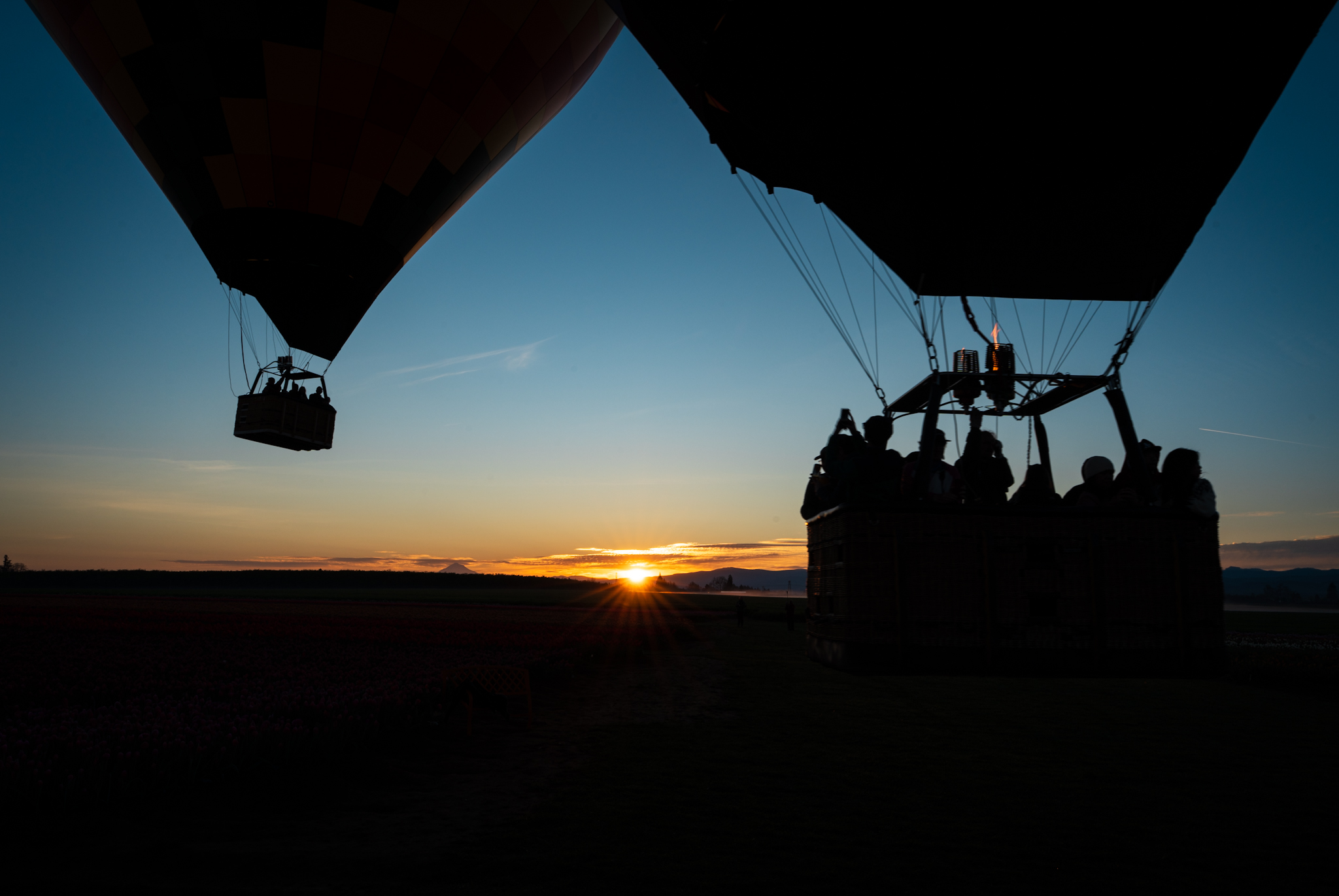
Here’s a side-by-side of a JPG out of camera vs an edited RAW. When I hand edited it I added some masks and did a glow around the setting sun. Is the edited version better? Yeah, but not so much that I feel like I couldn’t trust the camera to produce usable JPGs most of the time.


I should note that the RAW files were amazing. The GFX sensor has some crazy dynamic range, and one can push and pull shadows further than expected. However, the files did cause my M4 iPad Pro to choke out a few times. If I actually owned this camera I’d have to upgrade my setup to something with more RAM. Which, given the current way those prices are going is another impedimtent to ever owning one.
I didn’t take a lot of photos in low light or with high ISO, but I will note that from what I can see the grain holds up well even as the ISO gets higher. In Lightroom you can denoise pretty easily with good results in a single button click these days. So no complaints from me here.
Not Everything is Perfect
It feels good in the hand, is light enough to carry on a long hike without complaints, and the lens is sharp even wide open… so what are the downsides?
No IBIS sucks. My wife and I both have cameras with this, and we’ve both been able to get handheld long exposures that are sharp enough to share and even print. The GFX100RF doesn’t handle well enough below 1/30 of a second to get reliably sharp photos. Yes, I’m sure photographers with hands of steel can manage some magic. I can’t. And it sucks. I’d trade weight & size to get this feature on a future version of the camera.
Fujifilm made a big point about how the top plate is machined from a solid block of metal. The dials are all precision-machined with lovely textures. It’s all very premium feeling except for the crop lever and exposure compensation dial. They’re both so gummy feeling that I kept wondering if a prior renter had messed them up. However, I’ve looked at other reviews of this camera and people have mentioned these dials are lacking in satifsying tactile clicks.
Branching off of this, my single biggest annoyance was: The shutter button. It’s surprisingly mushy with poor feedback for when you’ve reached the half-press position. Combine this with the leaf shutter, there’s not a clear “click-curchunk” shutter curtain sound feedback loop. Which was really disconcerting coming from the Sony A7C2 which has a loud clear click. The only way I knew the GFX100RF was capturing anything was the brief black out on the screen.
This lack of tactile feedback meant that when I accidentally left the camera in burst mode, I ended up with a bunch of shots where I had six or more frames of the same thing. Why did I have the camera in burst mode? I tried taking some pictures of a moving dog. It was a bad experience. People complain about Fujifilm’s autofocus systems and they’re not wrong. It could not stay locked onto an overweight large dog running slowly towards me. If I bought this camera I’d probably get better at working with the autofocus system, but out of the box it was not a great first impression.

Final Thoughts
The GFX100RF will remain a “One day, maybe” camera for me, but the whole experience of renting it doesn’t feel wasted. For a few days I got to experience that “my camera inspires me” sensation that other photographers speak of. Maybe it was all the dials. Maybe it was the film sims. Either way, I really enjoyed those few days.
While the cost of this particular camera puts it beyond my wallet, it did give me a newfound appreciation of Fujifilm cameras in general. I now find myself curious to see if the long-rumored X-Pro 4 turns out to be real. I really like rangefinder-style cameras, and if this one is good then I might be joining my wife in the Fujifilm system. Then new lenses become a “household” expense, right?